
Trading during a war is one of the most daunting situations an investor can face. Extreme volatility, driven not by economic fundamentals but by frontline news, can devastate underprepared portfolios within minutes.
What follows looks first at how a geopolitical shock travels through global assets, using the escalation of early 2026 as dated context, and then sets out practical guidance on protecting capital and avoiding the most common emotionally driven mistakes.
How a Geopolitical Shock Reaches the Markets
The example behind this article is a specific one. On 28 February 2026, combined United States and Israeli forces launched an offensive against Iran, and strikes on Tehran continued into the first days of March (timeline of the 2026 escalation). The market conditions described below belong to that period; the mechanics they illustrate outlast any particular conflict.
The first effect of news on that scale is a repricing of risk rather than of fundamentals. Capital rotates toward assets conventionally treated as safe havens, which is why gold and the US dollar tend to attract flows while a shock is still unresolved. That rotation is a reaction to uncertainty, and it unwinds as quickly as it arrives once the uncertainty is priced.
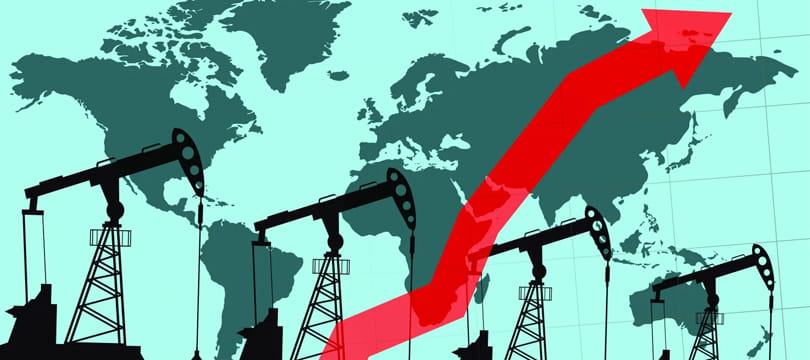
Energy is the second channel. The Strait of Hormuz is a chokepoint for approximately 20% of the world's seaborne oil and LNG supply, so any credible threat to transit through it moves crude by several percentage points on a single headline, and reverses on the next one.
Equity rotation follows a familiar shape: sectors tied to defense and cybersecurity usually attract buyers, while industries tied to tourism and air transportation are sold on fears of a prolonged regional escalation. None of these moves is dependable enough to trade on its own, and each of them can turn on one diplomatic statement. A full accounting of the war's market winners and losers is available separately.
Survival Strategies and Risk Management
To navigate these turbulent waters without going under, an extremely conservative approach must be adopted. The first rule of survival is a drastic reduction in financial leverage. In peacetime, leverage can amplify gains, but under this kind of volatility a sudden price spike triggered by a breaking news wire can trigger stop-losses or, worse, wipe out margin before there is any chance to react. Anyone who normally operates with high exposure should reassess their risk tolerance before anything else.
Here are some practical guidelines to follow.
- Avoid impulsive news trading. Tying entries and exits to a wartime event or a political statement is highly risky. Initial market moves often prove to be liquidity traps. The advice is to wait for the market to digest the news before identifying the true direction of the trend.
- Widen your stop-losses. Given the elevated intraday volatility, overly tight stop-losses are constantly triggered by market noise. It is preferable to reduce position size and widen the stop to give the trade room to breathe. Checking how far a pair normally travels in a session, on the forex volatility page, turns that judgment into a measurement, and a lot size calculator converts the wider stop back into a smaller position so the money at risk stays the same. The reasoning behind level-based stops is covered in this guide to where to place a stop loss.
- Defensive diversification. A portfolio overly exposed to cyclical equities may benefit from assets that have historically held up during instability, such as precious metals or short-term government bonds, which are viewed as safer than long-duration bonds facing the threat of war-driven inflation. In currencies the same discipline applies through the correlation matrix: positions that look separate often carry the same risk under two different names.
- Monitor opening gaps. Over weekends or between trading sessions, news can evolve rapidly. Wide price gaps at the open can bypass protective orders entirely. Knowing which scheduled releases land inside an already tense session, from the economic calendar, at least removes the avoidable surprises.
Fundamentally, in a wartime environment, the primary objective should not be to maximize profit, but to ensure the survival of the trading account.
Some Psychological Guidance
Strategies and technical guidance are essential, but in a wartime scenario the true line between survival and collapse is drawn by the psychological dimension.
Operating while newswires are broadcasting reports of strikes and geopolitical tensions demands a level of composure that goes well beyond ordinary trading routine, as it forces traders to contend with relentless emotional pressure. Above all, one must manage the paradox of attempting to protect or grow capital during a period of collective human suffering.
Detachment therefore becomes an indispensable defensive tool: it is essential to separate the human impact of wartime events from the cold analysis of financial flows, as allowing fear or anger to influence a buy or sell order will inevitably lead to irrational decision-making.
Another insidious danger is obsessive news monitoring, a habit that fuels anxiety and compulsive reactivity. Rather than reacting to every diplomatic statement or agency bulletin, it is better to drastically limit exposure to non-essential information flows and focus on technical levels and a pre-established strategy. Information overload does not make anyone better prepared; it simply makes them more vulnerable and prone to overtrading.
It is also critical to come to terms with the absolute unpredictability of conflict. Many investors fall into the trap of trying to rationalize the irrational, attempting to second-guess the next move of the governments involved and ultimately becoming ensnared in hypothetical scenarios.
Psychological wisdom lies in recognizing that world events cannot be controlled, while the response to them can be. This means maintaining iron discipline, respecting scheduled breaks away from the screens, and refusing to be swept up in mass panic.