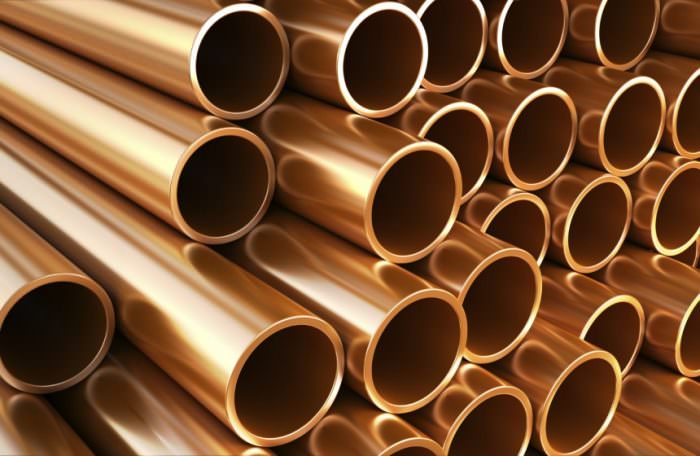

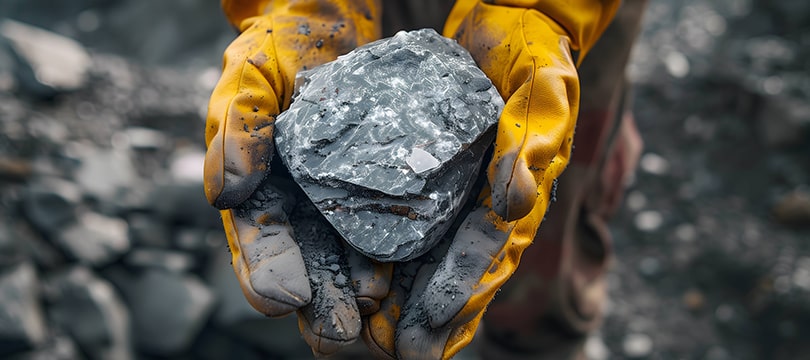
Electrification is a demand story with a supply problem. Every electric vehicle, every grid upgrade, every solar installation and every battery storage system consumes metal that has to be dug out of the ground, and the mines that would supply it take the better part of two decades to bring from discovery to production. Copper, lithium and nickel are what the market calls energy transition metals, and the label hides how differently the three behave.
That mismatch is why copper, lithium and nickel became macro trades rather than industrial commodities. It is also why they have been so volatile: a structural demand thesis does not stop a market from falling 60% when the near-term balance goes the other way.
Copper: an old metal with a new job
Copper has been used in construction, wiring and electronics for over a century. What changed is that electrification runs on it, and there is no substitute at scale.
The numbers behind that are worth knowing. An electric vehicle uses several times the copper of a comparable combustion car, mostly in the motor and wiring. Offshore wind and solar installations are far more copper-intensive per unit of generation than gas plants. And the largest source of transition-related demand is not vehicles at all: it is the grid, which has to be rebuilt and expanded to carry the load, and which consumes copper in cable at enormous scale. A newer claimant has joined the queue: S&P Global estimated in January 2026 that total copper demand will grow by about half by 2040, from 28 to 42 million metric tons, with demand from data centers more than doubling to around 2.5 million tons as AI computing adds load that the grid was never sized for.
Short term, copper is a cyclical. Prices track global industrial activity, and above all Chinese construction and manufacturing, since China consumes roughly half of world supply. Manufacturing PMIs, Chinese credit data and property starts move the price more than any transition narrative.
Medium term, supply is the constraint. New mines take fifteen to eighteen years from discovery to production (S&P Global puts the average at just under sixteen, and closer to eighteen for the mines that started up between 2020 and 2023), need billions in capital, and face permitting and community opposition that has stopped several major projects outright. Ore grades at existing mines are declining, so more rock has to be moved for the same output.
The result is a market that is structurally tight and cyclically volatile at the same time. Both things are true, and traders regularly get hurt by holding one while the other is driving the price.
Copper's other role is as an economic indicator: Dr. Copper, the metal with a PhD in economics, used as a read on global industrial demand. That works less well than it used to, because transition demand is now large enough to hold the price up during industrial slowdowns.
Lithium: a young market with violent cycles
Lithium became strategically important only recently, when lithium-ion batteries became the standard for portable electronics and then for vehicles. Demand growth has been extraordinary. So has the price volatility.
The market is young, thinly traded and dominated by a handful of producers, which makes it far more reactive than copper. Lithium prices have risen several hundred percent and then fallen by comparable amounts within a couple of years, driven by the gap between planned battery capacity and actual vehicle sales.
Supply comes in two forms with different economics. Brine operations, mostly in South America, evaporate lithium-rich water in ponds: cheap to run, slow to scale, weather-dependent. Hard rock mining, largely in Australia, extracts spodumene ore: faster to bring online and to shut down, more expensive per metric ton. Hard rock is the swing supply, which means it sets the marginal price and it responds to price faster than brine does.
Two risks are specific to lithium. The first is that battery chemistry keeps changing, and not every change hits lithium the same way: sodium-ion, if it takes hold in stationary storage, would remove lithium demand from that segment outright, while the shift toward lithium iron phosphate mostly removes nickel and cobalt from the cell rather than lithium. The second is that supply responds. High prices in the early 2020s triggered a wave of investment, and much of that capacity arrived at once.
Lithium is a bet on electric vehicle sales and battery chemistry, expressed through a market too small to absorb a change of view smoothly.
Nickel: the metal that broke its own exchange
Nickel matters for stainless steel first and batteries second, and the distinction inside the market is the part most people miss.
Class 1 nickel is high purity and suitable for batteries. Class 2 (nickel pig iron and ferronickel, largely produced in Indonesia) goes into stainless steel and historically could not be used in batteries. Processing technology has partially bridged that gap, which is why Indonesian supply growth has been able to weigh on a market that was supposed to be short of battery-grade metal.
Nickel also produced the clearest recent demonstration of what happens when a commodity market runs out of liquidity. In March 2022 a large short position, held against physical production, faced a price spike driven by supply fears. The squeeze pushed prices to multiples of their starting level within hours. The London Metal Exchange suspended trading and then canceled hours of executed trades, a decision that led to litigation and to lasting damage to confidence in the venue.
The lesson generalizes beyond nickel: in a market with concentrated positioning and thin liquidity, the exchange is a participant, not a neutral referee. That is the same conclusion the silver market reached in 1980.
What actually moves these prices
Four categories, in rough order of how often they matter.
Chinese demand. China dominates consumption of all three metals and most of the refining capacity. Chinese credit growth, property starts and industrial output are the highest-frequency inputs for copper and a large factor for the others.
Supply events. Mine disruptions, strikes, export bans and permitting decisions. These are step changes rather than trends, and they move prices immediately. Indonesian policy on nickel exports and Chilean and Peruvian operations for copper have all repriced their markets on announcement.
Policy. Subsidies, tariffs, emissions rules and grid investment programs create or remove demand by decree. A change in electric vehicle incentives moves lithium in a way no fundamental data does. The channels through which those rules reach currencies and commodity prices are laid out in the article on how ESG policies affect forex and commodity trading.
The dollar and real rates. These are dollar-priced commodities, so a stronger dollar mechanically pressures them, and higher real rates raise the cost of holding inventory and of financing new mines.
The mistake the theme invites
The most expensive error in this sector is treating "energy transition metal" as a synonym for "price goes up".
Three things break that assumption.
Substitution. High prices are an instruction to engineers. Aluminum replaces copper in some wiring applications when the spread gets wide enough. Battery chemistries shift toward whatever is cheap. Demand destruction is slower than in energy markets but it is real.
Thrifting. The industry's word for redesigning a product to use less of an expensive input. Copper content per solar panel, silver per cell, lithium per kilowatt hour: all have fallen over time, because reducing input cost is what engineering departments are for.
Supply responds, with a delay. This is what produces the cycle. High prices trigger investment; the investment arrives years later, often a decade or more after the decision, frequently all at once, and often into a demand environment that has changed. The commodity that was scarce becomes the commodity in surplus, and the same analysts explain both.
Structural demand growth means the average price over a decade is likely higher than it would otherwise have been. It says nothing about the path, and the path is what a trader has to survive.
Ways to take the position
Futures on copper and nickel are liquid and exchange-traded. Lithium futures exist but are far thinner, and the physical market still trades largely on contract prices and assessed benchmarks rather than a screen.
Mining equities give leveraged exposure to the metal plus company-specific risk: operational failures, jurisdiction, cost inflation and management. A copper miner can fall while copper rises.
Thematic ETFs spread the risk across producers, at the cost of diluting the exposure with companies that are only partly in the business.
The currency shortcut
For anyone approaching these markets from foreign exchange, the currencies of the producing countries carry much of the same exposure, with far better liquidity than the underlying commodity. The Chilean peso is the cleanest copper proxy: Chile is the largest producer and the peso floats. The Peruvian sol carries the same exposure on paper but tracks copper less faithfully, because the central bank manages the float and leans against large moves. The Australian dollar carries broad industrial metals and iron ore rather than any one of the three. The Indonesian rupiah, despite the country's dominance in nickel, is driven far more by its rates and its current account than by the metal.
Trading the currency expresses the macro view without the roll, margin and liquidity problems of the commodity itself, which is why commodity currencies belong in the same analysis.
A long theme with a rough path
Over the next twenty-five to thirty years the world is projected to need about as much copper as it has mined in all of history, some 700 million metric tons, and the supply side cannot respond quickly. That is a genuine structural argument and it is not controversial.
What it does not deliver is a straight line. These are cyclical markets with concentrated production, policy dependence and a supply response measured in years rather than weeks. The correct position size reflects that the drawdowns inside the trend are as large as the trend itself.
Copper is the most liquid and the most cyclical. Lithium is the most volatile and the most exposed to a single end market. Nickel sits between them with a market structure that has already failed once under stress. They belong in the same theme and behave nothing alike.