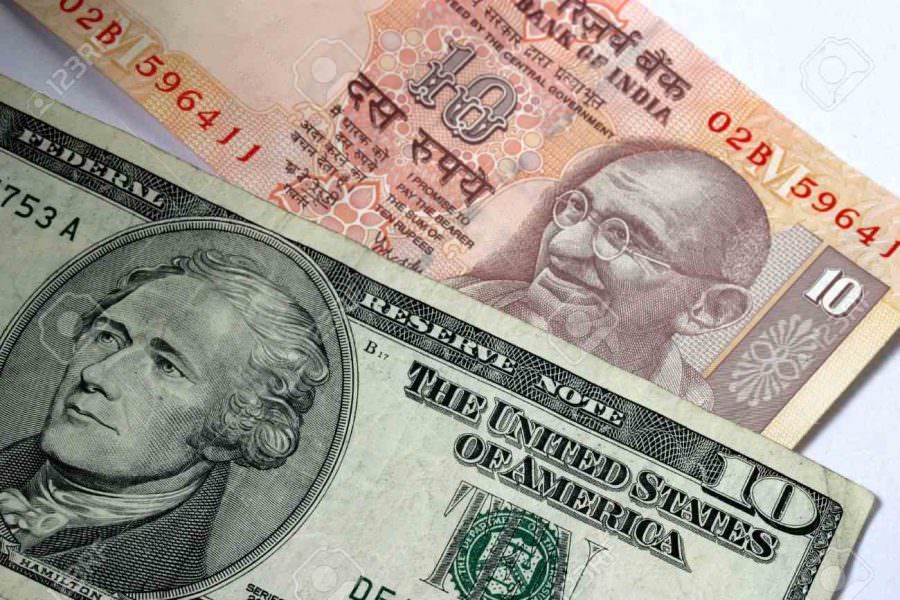


The same hamburger costs very different amounts in Zurich, Cairo and Jakarta. Convert those prices into one currency and the gaps do not close. Purchasing power parity is the theory that says they should, and the Big Mac Index is the joke that made it famous.
Both are more useful than they look, and considerably less useful as a trading signal than they are usually presented.
The law of one price
The starting point is simple. In a frictionless world with no transport costs, tariffs or trade barriers, an identical good should cost the same everywhere once converted to a common currency.
If it did not, someone would buy where it is cheap, sell where it is expensive, and keep doing so until the prices converged. Arbitrage enforces the law.
Extend that from one good to a whole basket and you get purchasing power parity: the exchange rate between two currencies should equal the ratio of the price levels in the two countries. If a basket costs $100 in the United States and £80 in Britain, the exchange rate should be 1.25 dollars per pound.
It is a statement about what an exchange rate should be, which is why market rates deviating from it is interesting rather than an error in the theory.
The Big Mac Index
The Economist launched the Big Mac Index in 1986 as a lighthearted way of explaining PPP and updates it twice a year, in January and July. It has outlived most serious currency valuation models in the public imagination.
The choice of product is smart. A Big Mac is sold in roughly a hundred countries, though the Economist's index covers a little over fifty, and it is made to a standardized recipe from broadly comparable inputs. It is one item, built to the same specification everywhere, which removes most of the arguments about what belongs in a basket.
The calculation is straightforward. If a Big Mac costs $5.50 in the United States and 60 units of some currency at home, the implied PPP rate is 60 ÷ 5.50 ≈ 10.9 units per dollar. If the market rate is 15, that currency is trading roughly 27% below its Big Mac PPP, "undervalued" in the index's language.
The index consistently finds the Swiss franc and the Norwegian krone among the most expensive currencies, and most emerging market currencies substantially cheap against the dollar. Those findings have persisted for decades without correcting, which tells you something important about the theory.
The serious version
The World Bank's International Comparison Program, and the OECD–Eurostat program that feeds into it, calculate PPP properly, using baskets of hundreds of goods and services (food, clothing, rent, transport, healthcare, education, recreation) priced in each participating country.
The output is a conversion factor used to compare economies on a like-for-like basis, and it changes the picture considerably.
Measured at market exchange rates, the United States has the largest economy in the world. Measured at PPP, China is larger, and has been for some years. Neither number is wrong; they answer different questions. Market rates tell you purchasing power in international markets. PPP tells you how much output an economy actually produces for its own people.
The same applies to incomes. An average salary of €15,000 in one capital against €60,000 in another looks like a fourfold difference. Adjust for what those salaries buy locally (housing, food, transport, services) and the gap narrows dramatically, sometimes to less than two to one. There is a limit to the adjustment, though: a PPP basket assumes like for like, and a €400 apartment in Bucharest is not the €1,500 one in Oslo with a different price tag. The index corrects for the price of a good, not for its quality.
Why market rates persistently deviate
PPP fails as a description of actual exchange rates, and the reasons are structural rather than temporary.
Most of an economy is not tradable. A haircut cannot be shipped. Neither can rent, restaurant meals, healthcare, education or most services, and these make up the majority of consumer spending in developed economies. Arbitrage cannot equalize the price of something that cannot be moved, so those prices are set by local wages and local conditions.
The Balassa-Samuelson effect. This is the systematic reason poor countries look permanently cheap. Productivity differences between rich and poor countries are large in manufacturing and small in services: a factory worker in a rich country is far more productive than one in a poor country, while a barber is roughly equally productive everywhere. But wages equalize within a country, so high manufacturing productivity pulls up service wages too. Rich countries therefore have expensive services, poor countries have cheap ones, and PPP shows the second group as undervalued forever. It is not a mispricing to be arbitraged; it is what different productivity levels look like.
Trade costs and taxes. Tariffs, transport, VAT rates and local regulation all drive wedges into the law of one price.
Capital flows dwarf trade flows. This is the decisive one for a trader. Trade in goods is a small fraction of daily foreign exchange turnover. Exchange rates are set overwhelmingly by capital seeking yield and safety, and capital does not care what a hamburger costs. Interest rate differentials, risk sentiment, safe-haven flows and reserve demand move rates far more, and for far longer, than any goods arbitrage.
Does PPP work at all?
The empirical answer is a qualified yes, with a horizon attached.
Over very long periods (commonly estimated at five to ten years or more) real exchange rates do show a tendency to revert toward PPP. Currencies that become extremely expensive in real terms tend eventually to weaken, and vice versa. The pull is real. The trade-weighted, inflation-adjusted version of the same idea is the real effective exchange rate, the index that central banks and the BIS publish to judge whether a currency is expensive against all of its trading partners at once.
The problem for anyone trying to use it is the speed. Studies of the half-life of PPP deviations typically find three to five years, meaning it takes that long for half the mispricing to correct. A currency 30% away from PPP might be 15% away in four years, and could easily be further away first.
No leveraged position survives that. This is why PPP-based currency trading works as a very long-horizon allocation input and fails as a trade: the signal is real, and the holding period required to harvest it is longer than almost anyone's tolerance.
The practical use is as a boundary rather than a signal. A currency far from PPP is not a sell, but it does tell you the valuation cushion is thin: a shock will find little fundamental support, and the move can be larger than the news warrants.
Where it is genuinely useful
Comparing economies. PPP-adjusted GDP is the right measure for questions about output, living standards and relative economic size. Market-rate GDP is right for questions about international purchasing power, debt service and reserve adequacy. Using the wrong one produces confident nonsense in both directions.
Comparing salaries and cost of living. Anyone weighing a job in another country, or an expatriate posting, needs the PPP comparison rather than the exchange rate. The market rate says what your salary is worth abroad; PPP says what it is worth where you will be spending it.
Sanity-checking a currency view. Knowing that a currency is at a multi-decade extreme in real terms is useful context, even when it is not a trade. Extremes eventually resolve, and knowing which direction gravity points is worth something.
Understanding inflation differentials. Relative PPP, the weaker version, which says exchange rate changes should offset inflation differences, works considerably better than the absolute version, and it is the mechanism through which persistently high-inflation currencies depreciate over time. That version is worth taking seriously, and it is simple to put to work: the inflation differential between two countries is the expected annual drift of their exchange rate. A currency running 10% inflation against 2% abroad should lose around 8% a year against that partner, and over five years it usually does, whatever it did in any single month.
A compass, not a map
Purchasing power parity is a useful idea that fails as a prediction. Exchange rates deviate from it for years, sometimes decades, because the forces that actually set them (capital flows, rate differentials, risk appetite) operate on a completely different timescale from goods arbitrage.
What it does well is correct the illusion that an exchange rate measures anything about living standards. It does not. A currency's market value reflects the demand for financial assets denominated in it, and that has very little to do with what a sandwich costs.
Used as context alongside interest rate differentials and positioning, PPP tells you where the long-run gravity is. It just does not tell you when, and in currency markets the when is most of the problem.