

Safe haven currencies are those that tend to hold or increase their value during periods of crisis, uncertainty and fear. When a geopolitical shock hits, equity markets fall, or an event frightens investors, global capital moves out of risk assets and into these harbours. Knowing which currencies carry that status, why they earned it, and how they actually behave is essential for anyone trading FX, and useful even if you never trade currencies at all, because their movements are one of the cleanest readings of global sentiment available.
The three currencies traditionally treated as the principal safe havens of the financial system are the US dollar (USD), the Japanese yen (JPY) and the Swiss franc (CHF). Each earned that status through a different mechanism, and each has specific limitations. This article covers what qualifies a currency as a haven, how the three work in practice, what the Swiss National Bank's 2015 decision taught traders about trusting that status, and how to use haven flows to read risk appetite.
What Qualifies a Currency as a Safe Haven
Not every currency can serve as a refuge. To acquire that status, a currency needs a combination of characteristics that make it credible to global investors at precisely the moment confidence in everything else is failing. Understanding those requirements explains why only a handful of currencies worldwide qualify.
The first requirement is political and economic stability in the issuing country. Investors look for currencies backed by solid institutions, the rule of law, and a low risk of political upheaval or default. In a global crisis, you want capital parked where something bad is least likely to happen next. The second requirement is liquidity and market depth: the currency has to be tradable in large size without moving the price excessively, and there must be safe, liquid instruments — typically government bonds — to hold it in.
Other factors matter too: the soundness of the domestic financial system, low external indebtedness or even a net creditor position against the rest of the world, and a long record of reliability. Haven status is typically built over decades, by repeatedly holding value when it counted. And that reputation is partly self-fulfilling: investors buy these currencies in a crisis because they expect other investors to do the same, which in turn strengthens them.
The US Dollar: The Ultimate Refuge
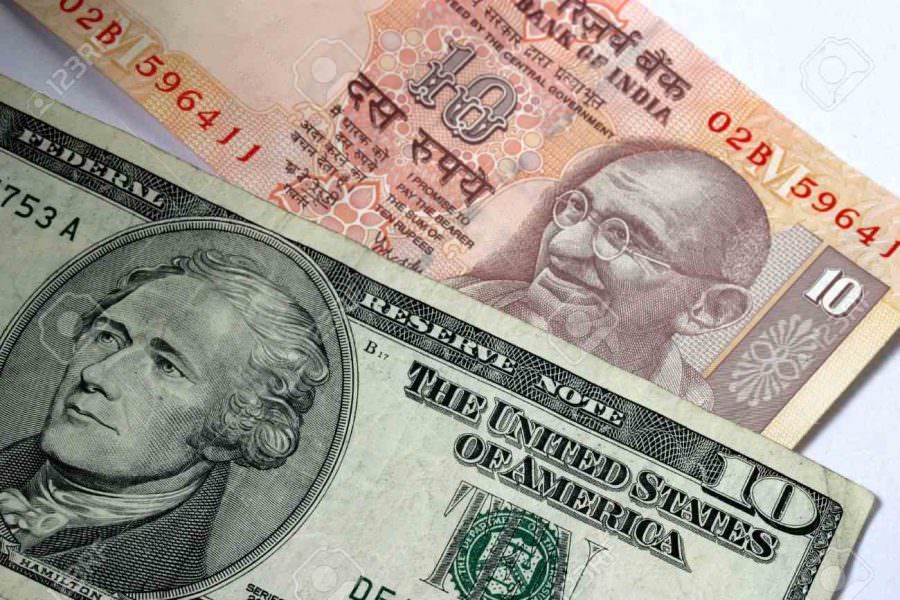
The dollar is the pre-eminent safe haven, and its status derives from a role no other currency holds. The dollar is the world's reserve currency: the most widely used unit in international trade, in central bank reserves globally, and across financial markets. That dominance gives it an enormous structural advantage as a refuge.
When a global crisis hits, demand for dollars typically increases for several distinct reasons. A large share of international debt and transactions is denominated in dollars, so a crisis triggers a scramble to obtain them to meet obligations. On top of that, the US Treasury market is by far the largest and most liquid government bond market in the world, which makes it the only place capable of absorbing very large amounts of capital at short notice. Treasuries are treated as among the safest assets available, and in a crisis investors pile into them, which supports the dollar.
There is something close to a paradox in this. Even when the crisis originates in the United States itself, the dollar frequently strengthens anyway. That is what happened during the 2008 financial crisis, which began inside the American financial system, and yet the dollar rose as global investors sought the liquidity and safety of Treasuries. The counterintuitive nature of that move shows how deeply the dollar's refuge role is embedded: in a genuine global panic, capital runs toward the dollar almost regardless of where the trouble started.
The Japanese Yen: The Creditor's Refuge
The yen is the second major haven, and its status rests on entirely different foundations. Japan is one of the world's largest economies with stable institutions and a sound financial system, but the primary reason for the yen's refuge behavior is Japan's position as a large net creditor to the rest of the world.
Japan has accumulated enormous foreign investments and assets over decades. Japanese investors and institutions hold substantial financial claims abroad. In normal conditions, a great deal of Japanese capital flows overseas in search of higher returns, since domestic interest rates have historically been very low. But when a global crisis hits and risk aversion rises, that capital tends to come home: Japanese investors repatriate funds, and repatriation generates demand for yen, pushing it higher.
This mechanism is closely tied to the carry trade. For years, investors borrowed yen at very low rates to invest in higher-yielding currencies and assets elsewhere. When markets turn turbulent and risk appetite collapses, those trades are unwound quickly: investors buy back yen to repay the loans, creating sharp demand. That carry trade unwinding is one of the main reasons the yen tends to strengthen abruptly during market panics. A guide to the dynamic carry trade covers the mechanics in detail.
In fairness, the yen's haven status has been genuinely debated in recent years. Through certain periods — 2022 in particular, and the years that followed — the yen weakened significantly rather than strengthening, despite considerable global uncertainty. The main cause was the enormous gap between Japanese interest rates, held very low by the Bank of Japan, and rates rising sharply in the United States and elsewhere. That rate differential made holding yen unattractive enough to override its traditional refuge behavior. It is a useful reminder that haven status is not a law of physics but a conditional relationship that depends on the macro environment. For the longer history, see the analysis of yen devaluation and its economic causes.
The Swiss Franc: The Alpine Refuge
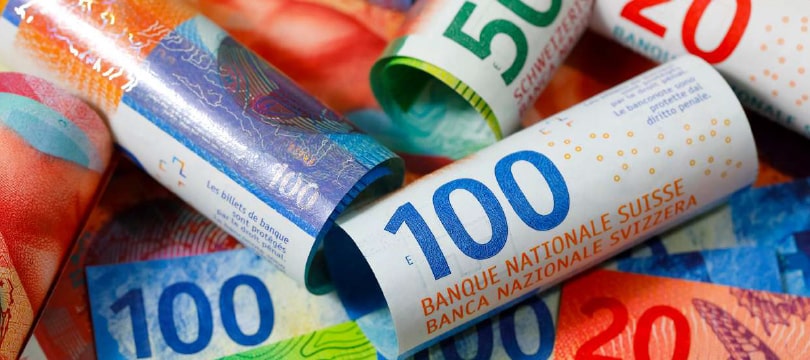
The franc is the third major haven, and its status reflects Switzerland's particular characteristics: political and economic stability, a tradition of neutrality, a solid and respected banking and financial system, low public debt, and a long record of reliability. Together these made the franc a classic destination for capital seeking safety.
When uncertainty rises, particularly in Europe, investors tend to move capital into the franc. Switzerland is viewed as an island of stability, frequently outside the turbulence affecting the European Union or other regions. During the European sovereign debt crisis of 2010 and 2011, enormous amounts of capital flowed into the franc, seeking shelter from concerns about the euro and European government debt. An article on why the franc stays strong even through rate cuts looks at how this plays out in current conditions.
That very status, though, created a serious problem for Switzerland, and led to one of the most dramatic events in modern currency market history. The massive capital inflow during the European crisis pushed the franc up so far that it threatened an economy heavily dependent on exports: an overly strong franc makes Swiss products too expensive abroad. How the Swiss National Bank responded is one of the most instructive episodes in FX.
The Frankenshock: When the SNB Broke the Market
The franc's story between 2011 and 2015 deserves its own section, because it is the clearest illustration of the risks that haven status can create. To stop the franc appreciating further during the European crisis, on 6 September 2011 the Swiss National Bank took a drastic step: it set a floor on EUR/CHF at 1.20, committing to prevent the rate from falling below that level.
To defend the floor, the SNB declared itself willing to buy foreign currency in unlimited quantities. In practice, every time the franc pushed toward the threshold, the SNB created francs to buy euros, keeping the rate above 1.20. The policy held for three years and four months. But it came at a cost: defending the floor required accumulating vast foreign currency reserves, which inflated the central bank's balance sheet enormously.
Then came the reversal. On 15 January 2015, with no advance warning, the SNB announced it was abandoning the floor. Only days earlier, SNB officials had stated that the minimum exchange rate would remain a pillar of monetary policy. The announcement caught the market completely unprepared, and the result was one of the most violent moves ever seen in a major currency: the franc appreciated roughly 20 to 30 percent against the euro within minutes. The episode became known as the Frankenshock.
The consequences for FX market participants were severe. Positions were liquidated at enormous losses, stop losses were jumped entirely because of extreme slippage and evaporating liquidity, and some traders ended up with negative balances, owing more than they had deposited. Several FX brokers took heavy losses, and some failed outright or had to be rescued. The Frankenshock has since become a standard case study on the dangers of excessive leverage, on trusting central bank commitments, and on what risk management has to account for.
Three Lessons From the Frankenshock
The lessons extend well beyond the franc. The first concerns excessive leverage. Many of the traders wiped out held highly leveraged positions, betting the 1.20 floor would hold. When the move came, leverage amplified the loss to catastrophic levels — in some cases beyond the capital available. In a market where sudden moves can be extreme, oversized leverage remains one of the primary causes of ruin.
The second is about not trusting guarantees blindly, including those from central banks. The market had convinced itself the SNB would defend 1.20 indefinitely and treated that commitment as a given. But the SNB had no legal obligation to maintain the policy forever, and when the cost became unsustainable it abandoned it without notice. No guarantee in markets is genuinely absolute, and building risky positions on the assumption that something will never change is dangerous.
The third concerns gap and slippage risk. During the Frankenshock, stop losses did not protect traders the way they expected, because the move was so fast and liquidity so thin that orders filled far away from their specified levels. This is a reminder that in extreme conditions stop losses are not perfect protection, and the true risk on a position can be considerably larger than it appears. Risk management has to account for these scenarios, however rare.
Using Haven Currencies to Read Market Sentiment
Beyond trading these currencies directly, the behavior of safe havens is a valuable tool for reading overall market sentiment. Watching how the dollar, yen and franc move gives you a read on how much fear or confidence is present in the global financial system at a given moment.
When haven currencies strengthen together, it is typically a risk-off signal: investors are frightened, exiting risk assets such as equities, emerging market currencies and commodities, and seeking safety. When havens weaken and higher-beta currencies strengthen, that is risk-on: investors are confident and willing to take risk in pursuit of higher returns. The alternation between risk-on and risk-off phases is one of the fundamental rhythms of global markets.
Experienced traders monitor these flows to understand the environment they are operating in. A sudden strengthening of the yen and franc alongside falling equity indices can signal the start of a fear phase, worth recognizing regardless of what you happen to be trading. Currency pairs that combine a haven with a higher-risk currency, such as AUD/JPY, are followed closely precisely because they act as a barometer of risk sentiment. A guide to intermarket correlations covers how these signals connect to gold, oil and bond markets.
Safe Harbours and Their Limits
The three major safe haven currencies are a structural feature of the global financial system, the ports where capital seeks shelter in a storm. Each earned that role differently: the dollar through its position as reserve currency and the depth of the Treasury market, the yen through Japan's creditor status and carry trade dynamics, the franc through Swiss stability and neutrality. For a comparison with the currencies at the other end of the spectrum, see the piece on safe haven versus high yield currencies.
But their history, and the Frankenshock in particular, also shows that haven status is never absolute or permanent. Economic conditions shift, as the recent debate over the yen demonstrates. Central bank policy can reverse abruptly, as the SNB proved in 2015. And relying blindly on assumed certainties in currency markets can produce catastrophic losses. Excessive leverage, unquestioning faith in guarantees, and underestimating gap risk are the traps that caught a great many traders.
For a trader, understanding haven currencies has a double value. It allows you to read global capital flows and gauge market risk appetite, which is genuinely useful for orientation. And the lessons drawn from events like the Frankenshock, on risk management, on leverage, on the conditional nature of guarantees, are universal and apply to every part of trading. Safe harbours do offer shelter. But like everything else in markets, they need to be understood clearly, and with respect for the risks they carry.