

An ETF looks like a share and behaves like a fund. That combination is the whole innovation, and it changed investing more than any product of the last fifty years, largely by making the expensive version of the same thing hard to justify.
The machinery underneath is worth understanding, because it explains why ETFs cost so little, why they track their index closely, and where they stop working.
What is an ETF?
An exchange-traded fund pools money from many investors to hold a basket of assets (equities, bonds, commodities, or a mixture) and issues shares in itself that trade on an exchange.
The difference from a traditional mutual fund is when and how you transact. A mutual fund is bought and sold once a day, at a price calculated after the market closes. An ETF trades continuously through the session at whatever price the market is quoting, with a bid and an ask, like any listed share.
So a single order gives you a diversified portfolio, executed instantly, at a known price. You also see what you own: most ETFs publish their full holdings every day, where a mutual fund typically discloses its portfolio quarterly, weeks after the fact.
How they got here
The first modern ETF launched in the United States in 1993: an S&P 500 tracker under the ticker SPY. The idea was straightforward and, at the time, radical. Instead of buying 500 stocks or paying an active manager to try to beat the index, an investor could buy one instrument that owned all of them.
Growth was slow for a decade, then accelerated, and the reason is measurable. Study after study found that the large majority of active funds underperform their benchmark over long periods, and that the small group who outperform is not reliably identifiable in advance. Once that evidence was widely understood, a product delivering the index at a fraction of the cost was difficult to argue against.
Today ETFs exist for practically every index, asset class, region, sector and theme, holding many trillions of dollars.
Creation and redemption: the mechanism that matters
This is the part most explanations skip, and it is the reason the whole thing works.
The concern with any exchange-traded fund is obvious: if the shares trade on a market, what stops them drifting away from the value of what the fund actually holds?
The answer is a process involving large institutions called authorized participants (APs), typically market-making banks and trading firms that have signed an agreement with the fund.
If ETF shares trade above the value of the underlying holdings, an authorized participant buys the underlying securities, delivers them to the fund, and receives newly created ETF shares in exchange. It sells those shares at the higher market price and keeps the difference. The new supply pushes the ETF price back down.
If ETF shares trade below the underlying value, the process runs in reverse: buy ETF shares cheaply, deliver them to the fund, receive the underlying securities, sell them. Supply shrinks and the price rises.
The arbitrage is continuous and mechanical, which is why liquid ETFs track their net asset value closely without anyone managing the price. The figure to watch is the premium or discount to NAV, which issuers publish daily: a few basis points either way is the normal cost of the mechanism, while a persistent discount on a fund of liquid assets means the arbitrage has stopped working and the price is telling you something the NAV is not. It also has a tax consequence in some jurisdictions: because redemptions happen in kind rather than by selling securities, ETFs can avoid realizing gains that a mutual fund would have to distribute.
Why they are cheap
Cost is measured by the total expense ratio, the annual percentage of assets deducted for management. A broad index ETF might charge 0.03% to 0.20%. An actively managed fund covering the same market frequently charges 1% to 2%.
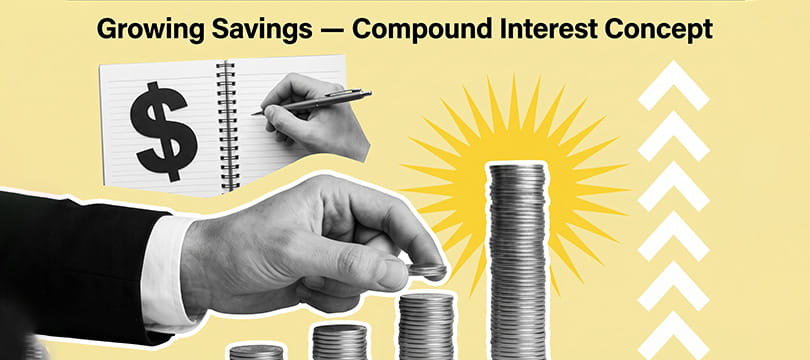
The gap compounds. On a $100,000 investment growing at 7% for thirty years, the difference between paying 0.10% and 1.50% is well over $200,000 of final value, because every dollar of fee is a dollar that never compounds.
Three things make the low cost possible. Tracking an index requires no research team. The creation and redemption mechanism handles inflows and outflows without the manager trading. And the trading that does happen is done by authorized participants rather than the fund.
The expense ratio is not the whole cost. There is also the bid-ask spread on every trade, brokerage commission where it applies, and tracking difference, the gap between the fund's return and the index's, which includes costs the ratio does not capture.
Physical against synthetic
ETFs replicate an index in one of two ways, and the difference is about who bears which risk.
Physical replication means the fund actually owns the securities. A physical S&P 500 ETF holds the 500 shares in index proportions. Simple, transparent, and the standard for liquid equity indices. Where an index has thousands of components, a fund may hold a representative sample rather than all of them, which introduces a small tracking error.
Synthetic replication means the fund holds a basket of collateral and enters a swap with a bank that agrees to pay the index return. It is used where the underlying is hard or expensive to hold directly (some commodity and emerging market exposures) and it can track more precisely.
The trade-off is counterparty risk: if the swap provider fails, the fund depends on the collateral. Regulation limits the exposure, but the risk is structurally different from owning the shares, and it is worth knowing which type you hold.
What is available
Equity ETFs track global indices, national indices, sectors, or factors such as value, quality, momentum and low volatility.
Bond ETFs cover government, corporate and high yield debt across maturity bands. One structural point deserves emphasis: a bond ETF has no maturity date. It rolls its holdings continuously, so unlike an individual bond it never returns par on a fixed day. A period of rising yields produces a loss that is recovered only through higher future income. Target-maturity bond ETFs, which hold bonds that all mature in the same target year and then wind up and return the capital, restore that feature.
Commodity ETFs either hold the physical metal or hold futures. The futures-based ones carry roll costs that can make them diverge substantially from the spot price over time, the reason several oil ETFs have badly underperformed the oil price.
Leveraged and inverse ETFs aim to deliver a multiple of the daily return. The word doing the work is daily: because they reset each day, their performance over longer periods diverges from the multiple of the index return, and in a volatile market they lose value even when the index is unchanged. They are trading instruments for single sessions and are consistently misused as long-term positions.
The risks that are real
Market risk, undiminished. An ETF removes the risk of one company failing. It does nothing about the market falling, and an index tracker will fall exactly as far as its index.
Concentration inside a broad index. A market-cap-weighted index gives the largest companies the largest weight. Some major indices now have a substantial share of their value in a handful of names, which means an investor holding a diversified fund can have a far more concentrated bet than the number of holdings suggests. Check the top ten weights before assuming diversification.
Currency exposure. A fund tracking a foreign index in your home currency carries the exchange rate as well as the index. Hedged versions remove it at a cost that varies with the rate differential.
Liquidity of the underlying. The ETF's own liquidity is not the point; the liquidity of what it holds is. In stressed conditions, funds holding illiquid assets (high yield credit, small caps, niche markets) can trade at meaningful discounts to their stated value, because the arbitrage mechanism depends on the underlying being tradable.
Thematic funds launched at the top. Products get created when a theme is popular, which is usually when it is expensive. The launch calendar of thematic ETFs is a reasonable contrarian indicator, and the performance record of funds launched into enthusiasm is poor.
How they get used
For most long-horizon investors, the evidence supports something dull: regular purchases of one or two broad, low-cost equity funds (dollar-cost averaging, a fixed amount on a fixed date whatever the price), held through cycles, with income reinvested. Nothing about it is clever, and the reason it works is that it minimizes the two things that reliably destroy returns: costs and behavior.
ETFs are also used tactically: to take a position on a sector, region or asset class quickly and reverse it just as quickly. That is legitimate, and it is a different activity from the first, with a different failure mode.
A workable structure for many portfolios is a core of broad index funds with a smaller satellite of tactical positions, so that the long-term holding is not disturbed by short-term views.
The product that changed the price of everything else
ETFs made diversification, low cost and liquidity available to anyone with a brokerage account, and their most significant effect may be indirect: they forced the entire fund industry to justify its fees against a benchmark that charges almost nothing.
They are not a strategy. An ETF is a container, and what matters is what is inside it, what it costs, how it replicates, and whether the exposure is one you actually want. The instrument is excellent. The instrument does not decide whether the underlying was worth owning.