

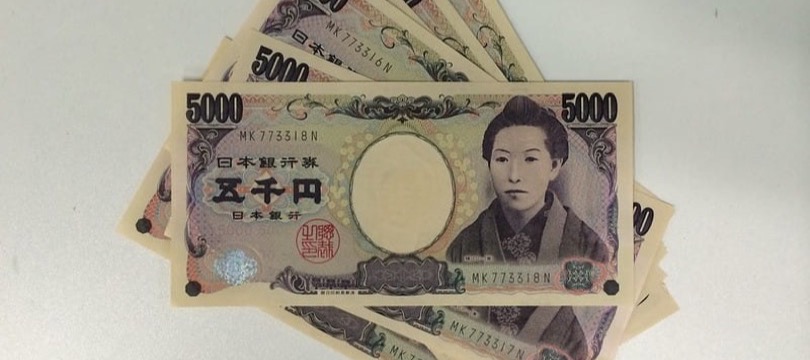
For a quarter of a century, the Bank of Japan (BoJ) was the world's great laboratory of monetary policy. While the Federal Reserve and the European Central Bank raised and lowered rates with the normal rhythm of the economic cycle, Japan stayed pinned to the floor: rates cut to zero for the first time in 1999, quantitative easing invented in 2001, years before the rest of the world discovered it, negative rates from 2016, and even direct control of government bond yields. No major central bank has ever pushed monetary policy so far, for so long.
Why? What happened to Japan to force its central bank into twenty-five years of extreme measures? And why should traders care? Because Japanese zero interest rates fed the global yen carry trade for decades, one of the most important capital flows in the currency markets. This guide reconstructs the story: the colossal bubble of the 1980s, its collapse, the "lost decades" of deflation, monetary experiments without precedent, and the historic normalization that began in 2024 and has taken Japanese rates, for the first time in a generation, back above symbolic levels.
Where It All Started: Japan's 1980s Bubble
Everything begins with one of the largest speculative bubbles in history. In the 1980s Japan looked destined to dominate the world economy: breakneck growth, companies buying assets across the globe, stock and property markets in orbit. The Nikkei 225, Tokyo's benchmark index, peaked at almost 39,000 points at the end of December 1989. Property values reached surreal levels: estimates that Tokyo's land was worth, on paper, as much as entire countries became proverbial. Bank credit fuelled all of it, with lenders extending loans against ever more inflated real-estate collateral.
Then, between 1990 and 1991, the bubble burst. The Bank of Japan itself helped puncture it, raising rates to cool the speculation. Equities collapsed, property began a slide that would last for years, and the banking system found itself sitting on a mountain of bad loans secured against assets worth a fraction of their former value. The Nikkei took decades to recover: after the 1989 peak the index sank for years and only climbed back above those highs on a sustained basis in 2024, thirty-four years later. An entire generation of Japanese grew up with the idea that shares and property "never come back".
The collapse in asset prices triggered what economists later called a "balance sheet recession": households and companies, poorer and indebted, stopped spending and investing to concentrate on paying down debt. Banks, weighed down by bad loans, stopped lending. Domestic demand faded, and with it, inflation. Japan slid progressively into deflation, the generalized fall in prices that is the hardest economic trap to escape.
The Deflation Trap and the Lost Decades
Japanese deflation was not a passing episode but a chronic condition. With prices flat or falling, all the perverse mechanics of a deflation trap kicked in: consumers postponed purchases (tomorrow it will cost the same or less), companies postponed investment, wages stagnated, and the real value of the debts accumulated during the bubble kept weighing. Japan's growth, which in the 1980s had frightened the world, turned into a multi-decade stagnation: the famous "lost decades".
The Bank of Japan responded by cutting rates, and quickly discovered a problem the textbooks of the day underestimated: when rates approach zero, conventional monetary policy runs out of ammunition. You cannot cut below zero (or so it was believed at the time), and if even at zero households and firms do not want credit because they are busy repaying debt, the liquidity on offer goes unused. It is the classic "liquidity trap" described by economic theory, and Japan became its global case study.
In February 1999 the BoJ took a step no major modern central bank had ever taken: it officially cut rates to zero, inaugurating ZIRP: the Zero Interest Rate Policy. It was meant to be temporary. It would become, with brief and unhappy interruptions, Japan's normal condition for the next twenty-five years.
The Monetary Laboratory: QE, Negative Rates and Yield Curve Control
With rates already at zero and deflation refusing to let go, the BoJ had to invent new tools. In March 2001 it launched quantitative easing: instead of steering the price of money (the rate), it would steer the quantity, creating reserves and buying securities on a large scale to flood the system with liquidity. QE feels normal today because the Fed, the ECB and the Bank of England used it massively after 2008, but it was Japan that pioneered it, years earlier, precisely because it was the first to find itself trapped at zero. That first program ran until 2006, with results judged modest: deflation eased but did not disappear.
The most aggressive turn came in 2013 with "Abenomics", Prime Minister Shinzo Abe's economic strategy, whose first pillar was ultra-expansionary monetary policy on an unprecedented scale. The new governor, Haruhiko Kuroda, launched Quantitative and Qualitative Easing: government bond purchases on a gigantic scale, an explicit 2% inflation target, and a promise to do whatever was necessary to eradicate the deflationary mindset. The BoJ's balance sheet swelled to a size never seen at a major economy, eventually exceeding Japan's entire GDP, and the central bank became by far the largest holder of the country's public debt.
Still it was not enough. In January 2016 the BoJ broke another taboo, cutting its policy rate below zero to -0.1% and charging banks a penalty on part of the reserves parked at the central bank, a kind of policy whose knock-on effects on currencies are examined in the guide to negative interest rates in forex. A few months later, in September 2016, came perhaps the most radical tool of all: Yield Curve Control, a commitment to keep the yield on ten-year government bonds around zero by buying however many bonds it took to defend that level. In practice, the BoJ was no longer just setting the short-term rate: it was administering long-term rates directly. No other major central bank had gone that far in the modern era.
The Yen Carry Trade: Why This Story Matters to Traders
For global markets, a quarter-century of Japanese rates at zero had one enormous consequence: the yen became the world's favorite funding currency. The mechanism is the carry trade: borrow where money costs almost nothing (in yen) and invest it where it earns more (dollars, emerging-market currencies, high-yielding assets). For decades, with the BoJ nailed to zero while other central banks offered positive returns, that differential fed colossal flows of capital out of Japan.
The yen carry trade also explains one of the currency's best-known behaviours: its role as a refuge in moments of panic. When global markets crash and risk aversion spikes, carry trades are unwound en masse: investors dump the leveraged risk assets and buy back the yen they had borrowed, generating sudden waves of yen demand that send its value soaring. It is the unwinding mechanism described in the article on safe haven currencies, and it is a direct child of zero-rate policy.
The coin had another side, though. When post-2021 global inflation forced the Fed and the ECB to raise rates rapidly while the BoJ stayed put, the yield gap became an abyss and the yen weakened dramatically, sliding against the dollar to levels not seen in decades and repeatedly forcing the Japanese authorities to intervene in the currency market in its defense, a slide whose deeper causes are analyzed in the piece on the yen's devaluation. Paradoxically, it was precisely the weak yen, together with the global price shock, that helped bring back to Japan the inflation it had sought in vain for thirty years.
The Historic Turn: Normalization Since 2024
And so to the most recent chapter, the one that closed an era. With Japanese inflation finally and durably above the 2% target, supported by wage increases not seen in decades, the BoJ under governor Kazuo Ueda (who succeeded Kuroda in 2023) began to normalize. In March 2024 came the historic decision: the end of negative rates and the dismantling of Yield Curve Control, Japan's first rate rise in roughly seventeen years.
From there the path has been gradual and deliberately cautious, consistent with a central bank that spent decades getting burned every time it tightened too early. The policy rate rose to 0.25% in the summer of 2024, to 0.5% at the start of 2025, to 0.75% at the end of 2025, and then came the symbolic threshold of June 2026, when the BoJ lifted its benchmark to 1%, the highest level since 1995, three decades earlier. At the time of writing the rate remains there, with the bank signalling that further gradual adjustments are possible if inflation and growth justify them, and with a lively internal debate on display: the June 2026 hike passed on a split 7-1 vote.
The perspective is worth underlining. After a quarter-century at zero or below, a 1% policy rate is still extremely low by international standards, and Japanese real rates (net of inflation) remain negative. Japan's normalization is a historic turn more for its direction than for its level: the country that abolished the cost of money has begun, with extreme prudence, to charge for it again.
Why It Took 25 Years: The Lessons of the Japanese Case
The question in the title deserves a direct answer: why did Japan stay at zero for so long? The short version is that escaping deflation proved much, much harder than falling into it. Every time the BoJ tried to normalize early, it attempted it in the early 2000s and again just before the global financial crisis, the economy and prices relapsed, forcing it to reverse course. The deflationary mindset, once rooted in households and firms that had watched prices and wages stand still for decades, became a self-fulfilling prophecy that was almost impossible to break from within. In the end, it took a global inflation shock to do it.
The first lesson, for other central banks, was exactly that: deflation must be fought early and forcefully, because once entrenched it can cost decades. It is no coincidence that the Fed and the ECB, faced with the crises of 2008 and 2020, reacted with massive and rapid QE: they had the Japanese example of the cost of hesitation in front of them. In a sense, the world learned modern monetary policy by watching the experiments, and the mistakes, of the Japanese laboratory.
The second lesson concerns the limits of monetary policy on its own. Twenty-five years of zero rates, trillions in asset purchases, negative rates and curve control were not enough, by themselves, to durably reignite inflation: they kept the system standing, but the turn only came when external factors, namely the global price shock and the weak yen, moved together with domestic wage dynamics. Money can do a lot; it cannot do everything.
The third lesson is for traders: central bank policies shape global capital flows for decades, and their turning points are epochal market events. The yen carry trade, built on a generation of zero rates, was one of the silent engines of world markets; the start of Japanese normalization has already shown how violent the tremors can be when that engine changes regime, with episodes of abrupt position unwinding that shook global equities. Whoever trades currencies — but also whoever trades indices — ignores the BoJ at their own risk.
The End of an Era, Not of the Story
The story of the Bank of Japan is one of the great economic narratives of the modern era: a colossal bubble, a devastating burst, three decades of war against deflation fought with tools nobody had dared use before, and finally, in recent years, the beginning of a normalization that closed the era of zero rates and returned the cost of Japanese money to its highest since the mid-1990s. The country that taught the world what a deflation trap means is now teaching it how delicate the exit is.
For traders, Japan remains one to watch. The yen is still one of the most important currencies in the world, the carry trade still depends on the gap between Japanese and global rates, and every BoJ meeting, every word from its governor, every board vote can move currency and equity markets worldwide. You can follow how the market is currently positioned on the yen on the USD/JPY analysis page and track upcoming central bank decisions in the economic calendar. The story of zero rates is over; the Bank of Japan's centrality to global markets is not. And the lessons of those twenty-five years — on deflation, on the limits of money, on the infinite patience some economic traps demand — remain among the most valuable that modern economic history has to offer.
Photo credit: bfishadow