
Herd behavior, sometimes called herding, is one of the most powerful and most expensive psychological forces at work in financial markets. It describes the tendency to follow what the group is doing instead of acting on independent analysis, and in trading it produces a reliably destructive pattern: buying when everyone else is buying, usually near the highs and driven by euphoria, then selling when everyone else is selling, usually near the lows and driven by panic.
That is the precise opposite of what makes money. Warren Buffett's advice to be fearful when others are greedy and greedy when others are fearful is, at its core, an instruction to resist the herd. Following it is extraordinarily difficult, because the pull toward the crowd is wired deep into human psychology. This article covers where that instinct comes from, how it inflates bubbles and accelerates crashes, and what can realistically be done about it.
What Herd Behavior Is and Where It Comes From
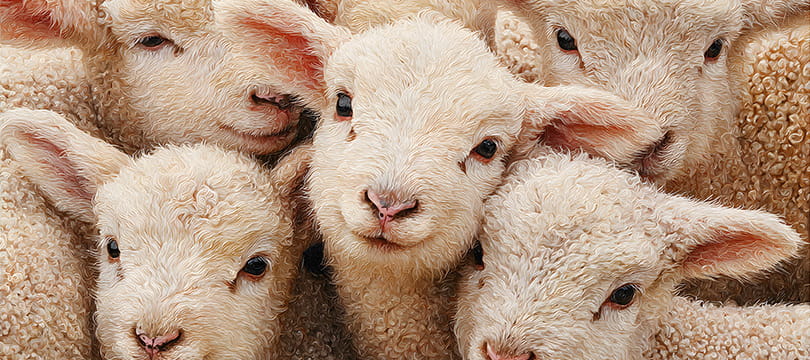
Herding is the tendency to conform to the behavior of a larger group, frequently at the cost of suppressing your own judgment. The name comes from the image of animals moving in unison: one starts running and the rest follow, often without knowing why. In humans the instinct shows up in almost every domain, but in financial markets it takes a particularly costly form.
Part of the explanation is evolutionary. For early humans, following the group was usually a sensible survival strategy. If everyone else in the tribe was running, there was probably a predator, and stopping to evaluate the situation independently could be fatal. Group safety and shared information gave a real advantage to those inclined to conform. That instinct, useful on the savannah, is still running.
There are more immediate social and psychological reasons too. Following the crowd feels safe and reduces the anxiety of uncertainty: being wrong alongside everyone else feels less like a personal failure than being wrong alone. There is also the implicit assumption that "if everyone is doing this, they probably know something I don't," which psychologists call social proof. And there is the fear of being left out of an opportunity everyone else is capturing. All of these push in the same direction.
Herding and FOMO: The Modern Accelerator
In contemporary markets, herd behavior is inseparable from FOMO, the fear of missing out. When an asset is rising quickly and everyone appears to be making money, the pressure to participate becomes enormous. Seeing friends, colleagues or social media accounts posting their gains produces a genuine, physical anxiety about being left behind.
FOMO is especially destructive because it pushes people to buy at the worst possible moment: after an asset has already risen sharply, when euphoria is at its peak and prices are most inflated. That is when risk is highest, and also when the pressure to buy is strongest. Traders driven by FOMO typically enter close to the top, shortly before the move unwinds, and absorb the largest losses.
Social media has amplified this dramatically. Herding used to propagate relatively slowly, through word of mouth and traditional media. Now an asset can go viral within hours, with millions of people discussing it simultaneously and generating waves of FOMO at a scale and speed with no historical precedent. Meme stocks and viral tokens are the clearest modern illustration of herding creating price moves that no fundamental analysis could justify or sustain.
How Herd Behavior Inflates Speculative Bubbles
Herding is a core ingredient of every speculative bubble, and bubbles follow a recognizable sequence in which crowd behavior drives each stage. Understanding the sequence helps you spot bubbles as they form, though it does not make them any easier to resist.
At the beginning, an asset starts rising for reasons that may be entirely legitimate: a promising technology, improving fundamentals. Early investors make money. As the price climbs, more people notice those gains and begin buying, not necessarily because of the fundamentals but because the price is going up and they do not want to be left out. This is herding in its purest form: buying because others are buying, in a self-fulfilling loop.
As euphoria builds, price detaches further from any underlying value. Absurd valuations get rationalized with the conviction that "this time is different" and that the old rules no longer apply. Herding peaks when even the cautious investors, worn down by watching everyone else get rich, finally capitulate and buy, typically close to the top. At that point there is nobody left to convert, and the bubble is ready to break. When the reversal comes, the same mechanism runs backwards: panic spreads, everyone sells at once, and the decline is fast and violent.
Crashes: Herding in Reverse
If herding inflates bubbles on the way up, it plays an equally devastating role on the way down. When prices start falling and fear spreads, the instinct to follow the group drives everyone to sell simultaneously, converting an ordinary decline into a self-reinforcing collapse. Panic is at least as contagious as euphoria — arguably more so.
The dynamic during a crash is powerful. Falling prices trigger fear, and watching others sell amplifies it: "if everyone is selling, I need to sell too, before it's too late." Nobody wants to be the last one out. This collective rush for the exit drives prices well below anything the fundamentals justify, producing what is often described as overshooting to the downside.
The paradox is that panic-driven crashes often create the best buying opportunities, precisely when most people are too frightened to act. When herding forces indiscriminate selling, prices can fall far below the real value of the assets. Investors able to resist the herd and buy into a panic are often the ones who come out ahead — after absorbing further declines first, because a panic rarely bottoms on the day you buy. Doing it requires acting against every instinct and against the visible behavior of everyone around you, which is why so few manage it. The article on the contrarian approach to online trading goes deeper into how this is applied in practice.
Why Following the Crowd Loses Money
The fundamental reason herding is so damaging is close to arithmetic. If you buy when everyone buys, at the highs, and sell when everyone sells, at the lows, you are doing the exact reverse of what generates a profit: buying expensive and selling cheap. It is a systematic method for losing money.
There is also a deeper logic. In markets, by definition, not everyone can be right at the same time. If everyone is buying an asset, who is on the other side selling? And if an asset has already risen sharply because everyone bought it, how much upside is realistically left? When sentiment is extremely bullish and everyone is already positioned, it usually means the remaining upside is limited (everyone who was going to buy has bought) while the downside risk is high. Peak collective optimism tends to sit near the top; peak collective pessimism tends to sit near the bottom.
This is why a number of well-known investors describe their approach as contrarian. They do not follow the herd; they look to move in the opposite direction when sentiment reaches an extreme. They buy into extreme pessimism and fear, when assets are discounted, and sell into extreme optimism and euphoria, when assets are overvalued. The approach is difficult precisely because it requires resisting herding — and it is often rewarded for exactly the same reason.
Why So Few Traders Manage It
If going against the crowd is so often rewarded, why do so few succeed? The answer lies in the psychological force of herding and the genuine discomfort of separating from the group. Resisting it is not primarily a question of knowledge; it is a question of tolerance for that discomfort.
Going against the crowd means accepting several distinct forms of pain. There is the discomfort of looking — and feeling — foolish when everyone does one thing and you do the opposite. There is the very real fear of being wrong alone; as Keynes wrote in 1936, "worldly wisdom teaches that it is better for reputation to fail conventionally than to succeed unconventionally." And there is the sting of watching others profit, at least temporarily, while you stand aside, or of watching your contrarian entries fall further before they recover.
Then there is timing. Contrarian positioning can pay over the long run, but in the short run a market can stay irrational for far longer than a position can be carried: the old trader's warning, often misattributed to Keynes. A trader who correctly identifies a bubble and stops buying, or shorts it, may watch it inflate for months or years before it breaks, absorbing losses or forgone gains in the meantime. In markets, being right too early is often indistinguishable from being wrong. That is what makes contrarian positioning psychologically exhausting even when the analysis is correct.
How to Defend Yourself Against Herding
Defending against herd behavior takes a combination of awareness, discipline and structure. The first step is simply recognizing the bias: knowing that herding exists, that it affects everyone including you, and that an urge to buy or sell may be driven by crowd behavior rather than by analysis. Awareness alone does not remove the bias, but nothing works without it. This overview of cognitive biases in trading covers the related distortions that tend to travel with it.
The most effective single defense is a written trading or investment plan based on your own analysis rather than on current sentiment. Clear, predefined criteria for entering and exiting reduce the temptation to react emotionally to what the crowd is doing. If you decided in advance, calmly, when and why you would open or close a position, you are considerably less vulnerable to pressure in the moment. The professional trading plan checklist on this site is a practical template for this.
It also helps to treat sentiment extremes with suspicion rather than enthusiasm. When euphoria is universal and everyone is certain an asset will keep rising, that is usually the moment for caution. When pessimism is universal and everyone is certain everything will collapse, that is usually the moment to start looking for opportunities. Learning to read extreme sentiment as a contrarian signal rather than a confirmation is a genuinely valuable skill, and it is exactly what retail sentiment data is useful for. The site's signal engine works the same way: retail positioning enters the score as a contrarian factor, starting to count from a 60/40 split, so a crowded book counts against the crowd rather than with it. Finally, limiting your exposure to noise (sensationalist headlines, FOMO-saturated social feeds, euphoric trading chats) makes it substantially easier to stay clear-headed.
The Courage to Think for Yourself
Herd behavior is one of the most insidious opponents a trader faces, precisely because it exploits instincts that are deeply embedded in human psychology. The urge to follow the group, to do what everyone else is doing, to avoid being left out, is ancient and strong. In financial markets, though, following it leads systematically to buying high and selling low.
Bubbles and crashes are, to a large extent, herding phenomena: collective euphoria inflating prices past any reasonable level, followed by collective panic knocking them down. Recognizing the pattern, and understanding the role crowd behavior plays in creating it, is essential to not becoming part of it.
But resisting the herd takes more than knowledge. It takes psychological resilience, discipline, and the willingness to think independently even when everyone around you is moving the other way. Build a method based on your own analysis, follow a predefined plan, treat sentiment extremes with skepticism, and limit your exposure to emotional noise. Successful trading frequently requires being willing to stand alone, against the crowd, when your own analysis says you should.